
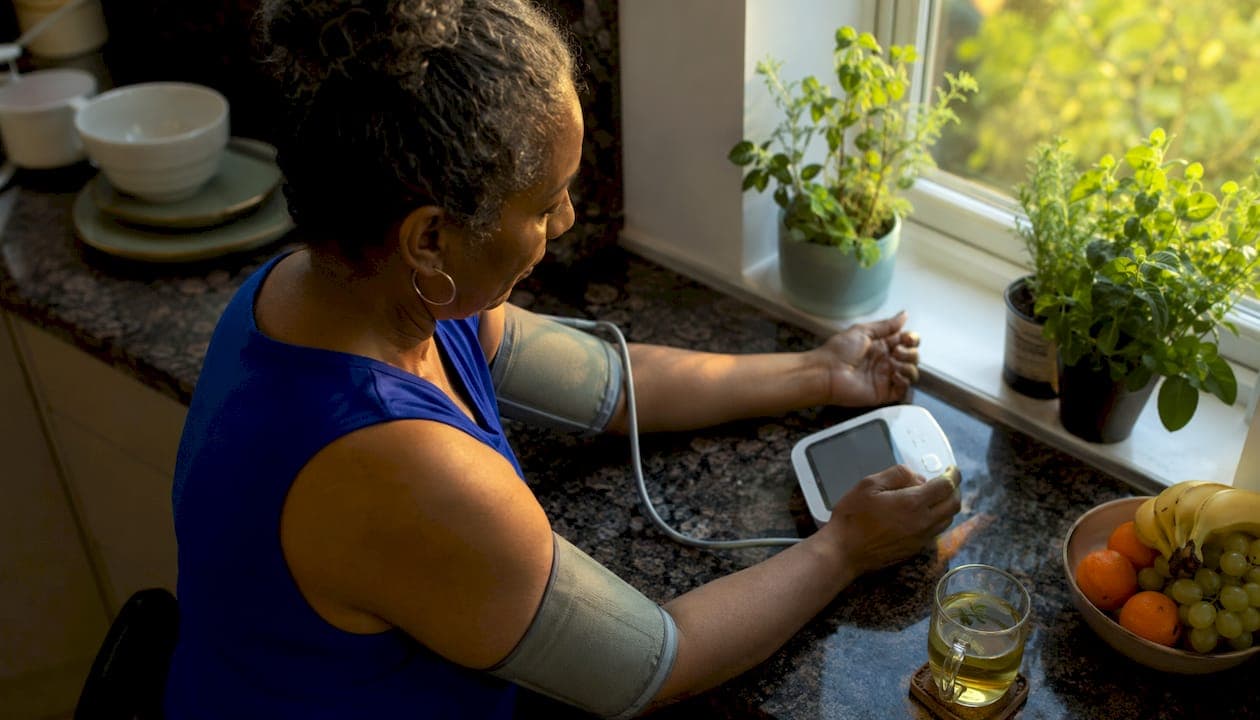
The best time to take blood pressure is twice daily: once in the morning after waking and resting, but before eating or taking medication, and again in the evening after dinner following a period of relaxation. This two-reading routine, recommended by NHS guidelines, gives you a reliable picture of your cardiovascular health rather than a single snapshot that could be skewed by activity, stress, or food.
When is the best time to take blood pressure readings?
Consistency is the single most important factor in home monitoring. Your body follows a circadian rhythm that causes blood pressure to rise sharply in the early morning, peak mid-morning, dip slightly in the afternoon, and fall to its lowest point during sleep. Measuring at the same times each day lets you track genuine trends rather than natural fluctuations.
Morning readings should happen after you have been up for at least 30 minutes, had a chance to sit quietly, and before breakfast or any medication. Do not measure the moment you wake. The morning surge in blood pressure that occurs immediately after waking can produce an abnormally high reading that does not reflect your typical daytime level.
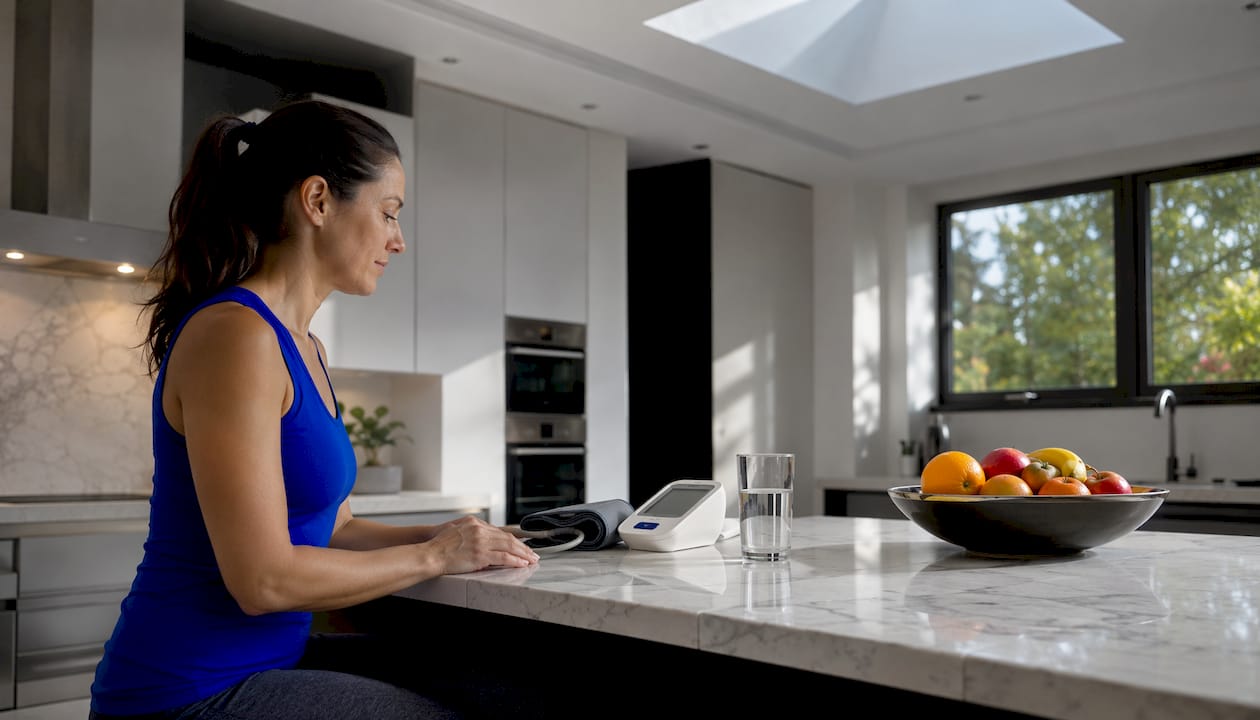
Evening readings work best after dinner, once you have been sitting calmly for at least an hour. Avoid measuring straight after cooking, washing up, or any physical activity.
Summary of best times to measure:
- Morning: 30 minutes after waking, before eating or medication
- Evening: after dinner, following at least one hour of rest
- Always at the same time each day for comparable results
- Never immediately after waking, eating, exercising, or smoking
How to prepare for an accurate blood pressure reading
Preparation directly affects the accuracy of your reading. A few simple steps before you sit down with your monitor can prevent false highs that cause unnecessary worry.
- Rest quietly before measuring; longer rest improves accuracy
- Avoid caffeine, smoking, and exercise for at least 30 minutes beforehand
- Empty your bladder before checking, as a full bladder raises readings
- Sit with your back fully supported, feet flat on the floor, and legs uncrossed
- Place your arm on a table so the cuff sits at heart level
- Use bare skin only; never measure over clothing
Stress and emotional upset also push readings higher temporarily. If you have just had a difficult phone call or a frustrating commute, wait until you feel calm before measuring.
Pro Tip: Never take your blood pressure immediately after a stressful event or physical activity. Even brisk walking to another room can elevate your systolic reading by several points. Sit down, breathe normally for five minutes, then measure.
How to measure blood pressure correctly at home
Using the right technique is just as important as choosing the right time. A validated automatic upper-arm monitor is the most reliable option for home use. Upper-arm cuffs are more accurate than wrist models for most people, and automatic inflation removes the guesswork from the process. You can find guidance on choosing a monitor that suits your needs on the Spinegear health advice blog.
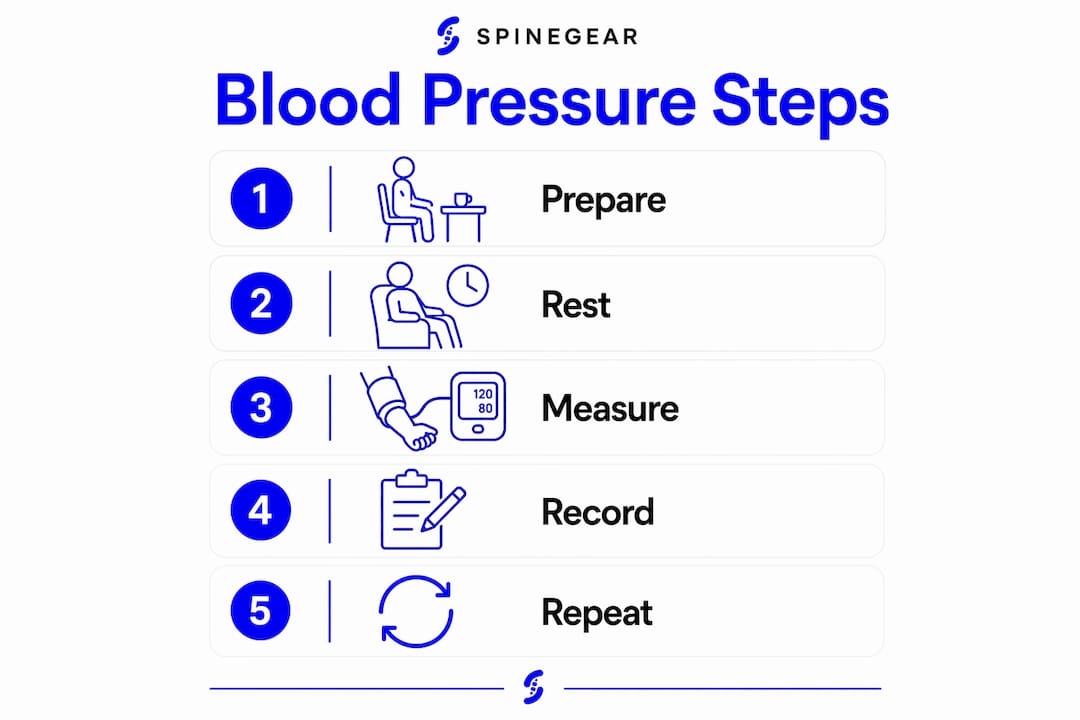
Step-by-step measurement:
- Sit in a chair with back support and rest for five minutes
- Place the cuff on bare skin, just above the elbow
- Rest your arm on a table at heart level
- Press the start button and remain still and silent
- Record the systolic (upper) and diastolic (lower) numbers, plus the time
- Wait one to two minutes, then take a second reading
- Take a third reading if the first two differ noticeably
Key measurement tips:
- Always use the same arm for every reading
- Make sure the cuff fits correctly; a cuff that is too small produces falsely high readings
- Do not talk or look at your phone during measurement
- Record every reading, not just the ones that look "normal"
For a full walkthrough, Spinegear's step-by-step measurement guide covers common errors and how to avoid them.
How often should you check blood pressure at home?
The right monitoring frequency depends on where you are in your care journey. Checking too rarely misses important patterns; checking too often can generate anxiety without improving outcomes.
Harvard Health and NHS guidance both point to a structured approach:
- Initial monitoring or after a treatment change: measure twice daily for at least one week, morning and evening
- Stable readings over time: reduce to two or three times per week once your healthcare professional advises it is safe to do so
- Before a GP appointment: take readings every day for the week beforehand so your doctor has a representative picture
- After starting new medication: daily readings for the first two weeks help confirm whether the treatment is working
Over-monitoring when stable can increase health anxiety without adding clinical value. Once your readings are consistently within your target range, your GP may suggest checking as little as once a day or less.
Understanding your blood pressure readings
Blood pressure is expressed as two numbers. The systolic figure (the higher number) measures the pressure in your arteries when your heart beats. The diastolic figure (the lower number) measures the pressure between beats. Both matter.
Readings naturally fluctuate throughout the day due to activity, stress, meals, and your body's circadian rhythm. A single high reading does not confirm hypertension. A pattern of consistently elevated readings across multiple days does.
| Category | Systolic (mmHg) | Diastolic (mmHg) | What it means |
|---|---|---|---|
| Optimal | — | — | Healthy range |
| Normal | — | — | Acceptable, monitor regularly |
| High-normal | — | — | Worth discussing with your GP |
| Stage 1 hypertension | — | — | Likely requires treatment |
| Stage 2 hypertension | — | — | Seek medical advice promptly |
For a detailed explanation of what each category means for your health, Spinegear's guide to understanding blood pressure readings covers normal, high, and low ranges in plain language.
Factors that cause temporary fluctuations:
- Physical activity raises systolic pressure during and shortly after exercise
- Stress and anxiety trigger a short-term spike in both readings
- Caffeine and nicotine elevate readings for up to 30 minutes
- White-coat hypertension causes higher readings in clinical settings than at home
- Medication timing affects when readings are at their lowest
Expert advice for home monitoring in the UK
Home blood pressure monitoring gives a more accurate picture of cardiovascular health than clinic-only measurements. It also helps identify white-coat hypertension, where readings are elevated in a medical setting due to anxiety but normal at home. NHS England endorses home monitoring as a reliable tool for managing hypertension and guiding treatment decisions.
Blood Pressure UK, the UK's leading patient-focused charity dedicated to lowering the nation's blood pressure, provides educational resources, a blood pressure chart, and guidance on lifestyle changes that support long-term management. Their materials are a useful complement to advice from your GP.
Dos and don'ts for sustained monitoring:
- Do record every reading in a logbook or app and share results with your GP
- Do measure at the same time each day for meaningful comparisons
- Do use a validated upper-arm monitor with the correct cuff size
- Don't stop or adjust medication based on home readings alone
- Don't ignore a consistently high pattern; contact your GP if readings remain above 140/90 mmHg
Pro Tip: After a high reading, wait 1–3 minutes before retaking the measurement. Measuring again immediately tends to produce another elevated result because the anxiety from the first reading has not yet settled. A calm second reading is far more informative.
Home monitors are a support tool, not a replacement for professional care. Always discuss your readings with a healthcare professional before making any changes to your treatment plan.
Key takeaways
Morning and evening readings, taken consistently under the same conditions, give the most reliable picture of your blood pressure over time.
| Point | Details |
|---|---|
| Best measurement times | Morning before eating or medication; evening after dinner and one hour of rest. |
| Preparation matters | Rest for five minutes, avoid caffeine and exercise for 30 minutes, and sit correctly before measuring. |
| Initial monitoring frequency | Measure twice daily for at least one week when starting out or after a treatment change. |
| Stable readings | Reduce to two or three times weekly once readings are consistently within your target range. |
| Seek professional advice | Contact your GP if readings remain consistently above 140/90 mmHg or if you are unsure about your results. |
Get the right monitor for accurate home readings

Accurate readings start with the right equipment. Spinegear offers a range of validated blood pressure monitors designed for home use, combining ease of use with clinical-grade accuracy. Whether you prefer an upper-arm model or a compact wrist monitor, every device is built to help you track your health with confidence and share reliable data with your GP.